Part 1 of 5 Coming soon
An intro to Windows Runtime Attestation
Why a compromised kernel can’t vouch for itself, and what a signed report does and doesn’t prove.
Series · 5 parts · 1 published
This series is about the Windows Runtime Attestation Report. It’s a feature I worked on, and one of my favourite things we’ve shipped. It gives your server a signed set of facts about a Windows machine’s kernel, like which drivers are loaded and what has been hotpatched. The signature comes from a part of Windows that the normal kernel can’t reach, so even a fully compromised kernel can’t forge it.
I’m writing it for people who build anti-cheat and security software. The posts start with why you’d need this at all, then get into the API and each report, with code you can run from the companion sample.
Why a compromised kernel can’t vouch for itself, and what a signed report does and doesn’t prove.
What comes back from the call field by field, and how to pull the reports out in code.
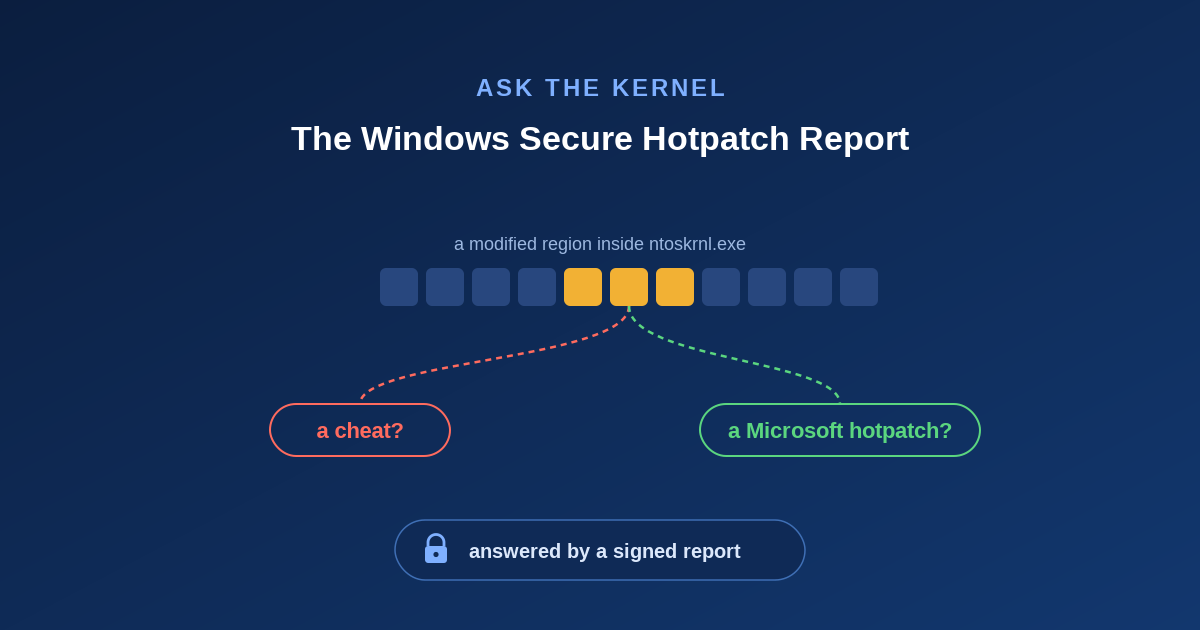
How the Windows Secure Hotpatch Report uses VTL1 attestation to help anti-cheat and security tools tell legitimate hotpatches from kernel tampering.
The drivers the machine has loaded, with the identity you need to spot an impostor.
How your server uses the TPM to decide the signing key belongs to a real Secure Kernel.